

Crypto arbitrage sounds like one of those internet promises, buy low, sell high, repeat. But behind the noise, there’s truth and most people miss it.
It’s not about secret apps or automated bots. It’s about having the right setup and knowing how to move fast and when to enter the market.
This is for creators, explorers, and anyone navigating online income. Know this, arbitrage is less of a trick and more of a system.
This guide is meant to update you on the real tools behind crypto arbitrage. The idea of how they work when put together, and what it actually takes to operate the system without guesswork.
There Are Mistakes Beginning Arbitragers Make
One major mistake beginners make is believing arbitrage is automated. I’ve seen searches on google about people looking for “arbitrage apps”. Some search for tools that can do everything in one click. Truth is, there’s no one click work it anywhere. And this is where most people get it twisted.
The crypto market doesn’t work that way. Prices differ across platforms, especially in peer-to-peer trading. Those differences are what appears to be opportunities. The kinds that do not last long, before disappearing within minutes.
But the challenge isn’t just finding arbitrage. There’s a part that says you have to be ready for it. If you make a mistake, it can easily turn what looks like profit into a loss. This can happen if you make payments too quickly or too slowly. You might also poorly track your trades or use the wrong platform.
What’s The Basic Plan Behind Crypto Arbitrage Trading
At its core, crypto arbitrage is simple. You buy an asset at a lower price on one platform and sell it at a higher price on another. Most times in Nigeria, this happens through P2P markets using USDT.
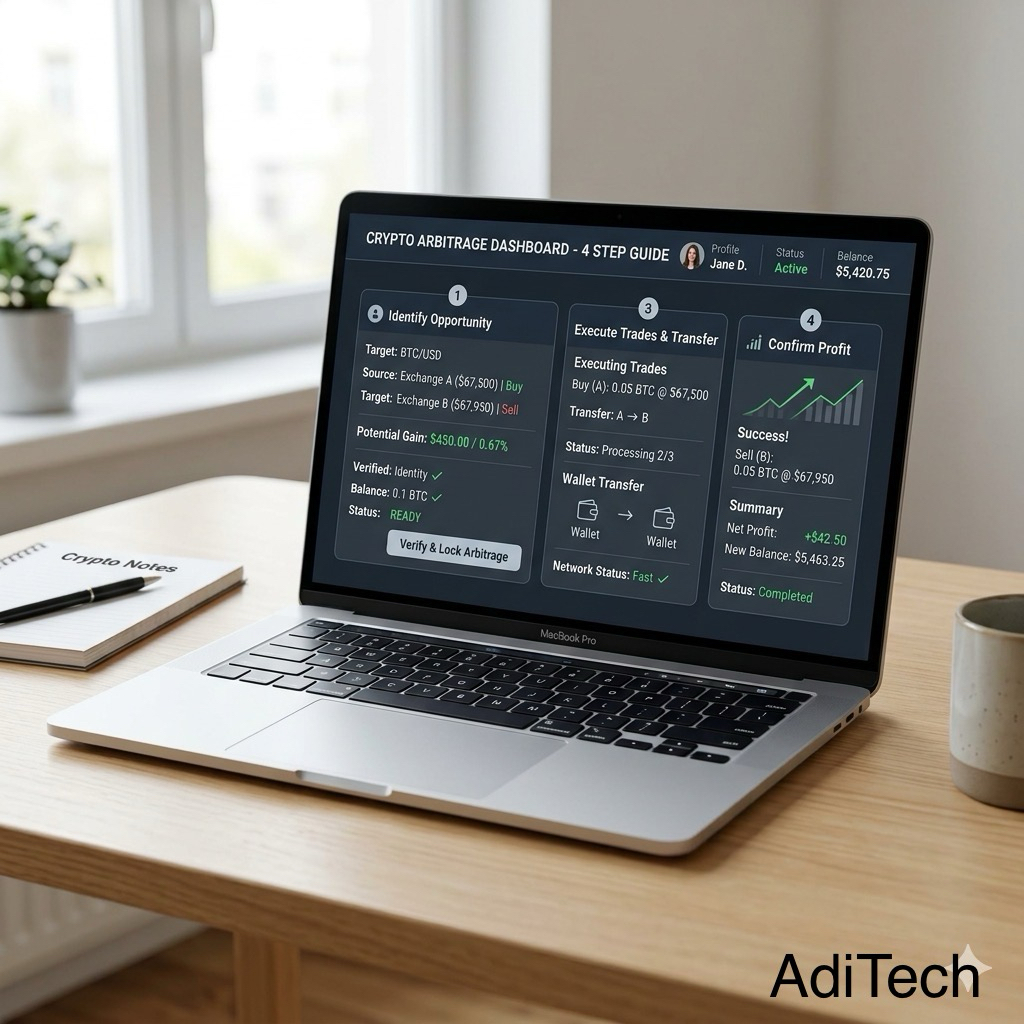
Platforms like Bybit and Binance serve as your entry and exit points. They give you access to buyers and sellers, and more importantly, liquidity.
To understand where the opportunity is, tools like CoinMarketCap and CoinGecko help you track general market prices. While they don’t reflect exact P2P rates, they give you direction.
Execution depends heavily on your payment channels. Fast bank transfers allow you move quickly when a trade presents itself.
Tools Needed To Participate in The Arbitrage Market
Behind the scenes, simple tools like Google Sheets or Notion help you track every move you make. You can record the price you bought and the price you sold. You can also note the fees you paid and the time each trade took. Using these tools help make it easier to see what is working and what is not.
The truth is, the profit in arbitrage is usually small, and this brings about details tracking. A small fee can reduce your profit. A slow transaction may also negatively affect profits. Even a tiny mistake of being too fast can turn profit into a loss. This is why staying organized and paying attention to every step is very important.
And tying it all together is escrow. Which is smartly built into platforms like Binance and Bybit. Knowing about escrow and how to utilize it’s potentials ensure that transactions are protected. Especially its ability to hold funds until both sides complete their part of the deal.
Building Your Crypto Arbitrage System
From a practical standpoint, arbitrage is no shortcut.
You start by setting up and verifying accounts on at least two exchanges. This gives you flexibility. You are never dependent on a single market. Pick from 8 Crypto Apps That Actually Did the Work in 2025.
Next is to monitor price differences. Which of course doesn’t require complex software. It requires attention. You compare what buyers are willing to pay on one platform versus another. That gap is your opportunity for entry.
When you spot it, execution becomes everything. You buy USDT where it is cheaper, then move quickly to sell where demand is higher. Timing matters because prices shift constantly.
Your payment setup must be ready before you begin. If your transfer takes ten minutes in a fast-moving market, you miss the opportunity. It disappears before you even start.
After each trade, you record everything on notion or google sheets. Buy price, sell price, transfer fees, platform charges. This is where most people fail quietly. Without keeping this tracking records, you assume profit. Keeping track of these details, you see the truth.
And learn the process of relying on escrow. It comes with the idea to never trade outside it. It’s not just a feature. It’s part protection against some losses.
Crypto arbitrage is not about discovering a hidden tool. It is about building a system that allows you to act quickly and safely.
Your exchange accounts are your access points, and without them, nothing starts. Your payment speed determines whether you win or miss the trade. Your ability to track prices gives you direction, not certainty. Your records protect you from invisible losses. And the idea of utilizing escrow is what keeps the entire process secure.
Use This Guide Properly
One important aspect to note is the no automation part. It is manual, and that is where the real edge lies.
If you’re serious about exploring crypto arbitrage, don’t start by chasing profits. Start by setting up your tools. Open your accounts, test your payment speed, and track a few trades without pressure. In arbitrage, the advantage doesn’t come from tools alone, it comes from how well you use them.